
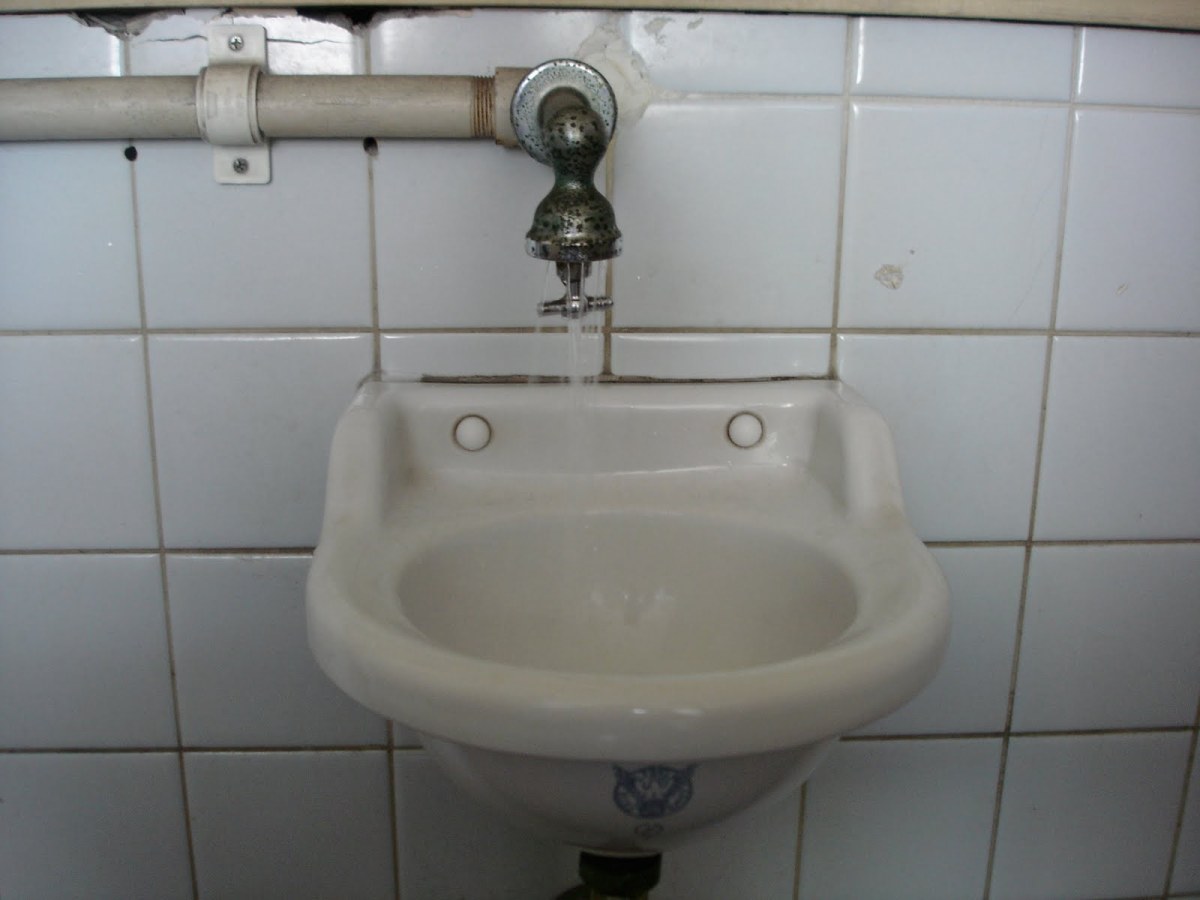
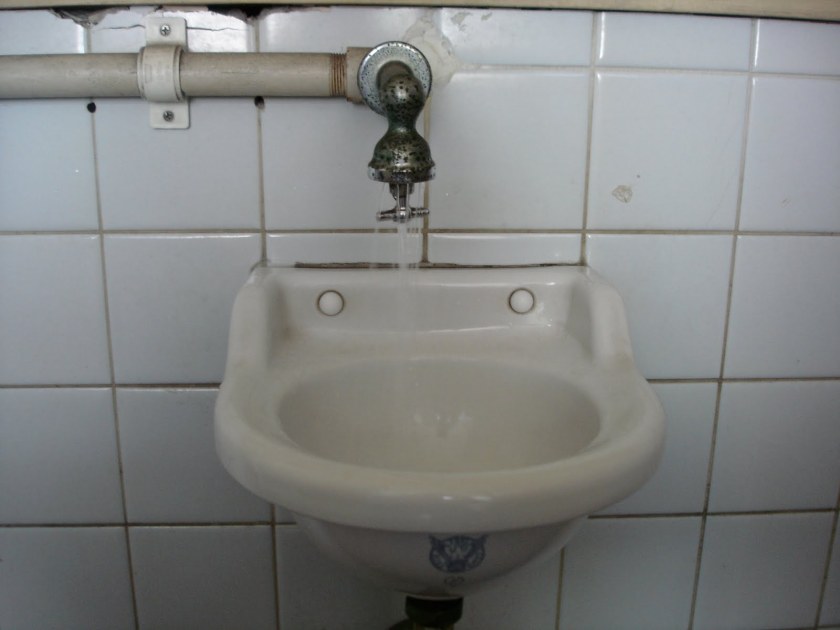
옛날 큐슈치과대학의 화장실 수도꼭지


DSC07583

지금은 수도꼭지가 더운물과 찬물을 섞어서 조절가능하도록 나오고 병원에서는 자동센서가 부착되어 있다. 화장실에서는 용무를 보고 수돗물을 틀게되면 수도꼭지를 처음 만지게 되고 씻고 다시 잠구어야 하니까, 우리의 무균 procedure의 개념으로 보면 모순이 있기 때문에 화장실, 그리고 진료실의 수도꼭지는 자동센서로 만드는 것이 당연하다. 일본에서 발견한 약간은 엽기적인 것이 큐슈 치과대학의 오래된 건물에 있는 화장실에서의 수도꼭지이다. 40-50년 전에 만들어진 이 건물은 이미 부숴져서 새로운 치과대학 건물이 만들어졌지만, 4-50년 전 일본 사람들은 앞의 모순적인 화장실에서의 프로세스를 개선하고자 사진과 같은 약간은 어색한 수도꼭지를 실제로 만들어 사용하였다. 수도꼭지를 틀면서 수세가 되고 잠그면서도 수세가 되며 수도꼭지 또한 항상 씻어내게 되는 것이다. 큐슈 치과대학이 있는 키타큐슈는 화장실용 제품으로 유명한 “Toto”라는 회사가 있는 곳이라는 것을 생각하면 이곳에 이런 시설이 만들어졌다는 것과 연관이 있을 것 같기도 한다.

어제 신문에서 사회적 자본과 자산의 양과 깊이에 대한 파리특파원의 글을 읽었다. (조선일보) 새로운 아이디어와 빠른 템포로 눈부시게 발전하는 우리나라가 선진국을 많이 따라 왔지만, 서구 선진국은 여전히 오랜 역사에서 내려져 오는 사회적 자본(정신적인 것을 포함)으로 인해 비효율적인 그들이 아직 여유있는 삶을 살고 있다는 것이다. 우리가 아무리 발전하였으나, 그 풍요를 누리기에 우리 삶이 빠듯한 이유 또한,  세월과 시간이 지나면서 축적되어 우리 삶에 녹아 있는 이 무형의 자본이 아직은 약하기 때문으로, 우리에게도 시간이 필요하다는 이야기이다. 어색하기는 해도 우리가 무의식적으로 생각하고 지나가던 화장실 수도꼭지의 약간은 찝찝한 과정을 오래전에 낮은 기술로도 고쳐보고자 실제로 만들어 보았다는데, 그래도 점수를 주고 싶은 생각이 든다.
구강악안면외과 전문의 필독 저널- 100 ‘must read’ OMFS articles

구강악안면외과 전문의 필독 저널리스트


대한구강악안면외과학회에서 전공의들을 위해 제시한 추천저널입니다. 교과서는 어느정도 합의된 내용을 다룰 수 밖에 없어 그 뒤에 있는 여러 의견들을 다 기술하지 못한다는 것인데 다양한 인용과 실험적인 부분들을 살펴 볼 수 있다는 점에서 논문 리뷰는 반드시 필요하다고 할 수 있습니다. 모든 논문을 다 읽어서 정리해 낼 수 있으면 좋겠지만, 개념의 발전에 중요한 논문들은 찾아서 읽는 것이 필요하여 전문의로서 읽어야 할 논문은 정리한 것입니다. 다소 오래된 논문도 포함하고 있지만, 그래도 지금의 개념이 생기는데 기본이 되는 것이라 포함이 되어 있습니다. 최신의 논문이 포함되면 좋겠지만, 좀 더 검증이 되는 시간이 필요한데, 그런 논문들은 오히려 ‘올해의 논문” 같은 형식으로 묶여지는 것이 나을 것 같기도 합니다. 좀 묵었지만, 잘 정리되고 모범적인 논문을 선택해야 되지 않을까 생각됩니다. 계속 100개 내외정도로 유지되는 것이 어떨까 생각되고, 그대로 유지해서는 안되며, 3-4년 주기로 반 정도를 교체하는것도 어떨까 생각됩니다. 어쨋든 시간이 갈수록 업데이트는 필수적일 것으로 생각됩니다. 논문의 원문을 pdf로 제공하면 좋겠지만, 저작권등 관련 온라인 상이라는 제한점이 있어서 목록만 올립니다.

혹시 정말 좋은 논문이 있어 필독 논문에 추천할 논문이 있으면 추천 부탁드립니다. 필독 눈문에 대해 삭제, 교체 등 평가를 해주시면 토의하여 반영 하였으면 합니다.


  1. Farbod F, Kanaan H, Farbod J: Infective endocarditis and antibiotic prophylaxis prior to dental/oral procedures: latest revision to the guidelines by the American Heart Association published April 2007. Int J Oral Maxillofac Surg 38: 626, 2009.
  2. Aframian DJ, Lalla RV, Peterson DE: Management of dental patients taking common hemostasis-altering medications. Oral Surg Oral Med Oral Pathol Oral Radiol Endod 103 Suppl: S45.e1, 2007.
  3. Doonquah L, Mitchell AD: Oral Surgery for Patients on Anticoagulant Therapy: Current Thoughts on Patient Management. Dent Clin North Am 56: 25, 2012.
  4. Turner M, Aziz SR: Management of the pregnant oral and maxillofacial surgery patient. Journal of Oral and Maxillofacial Surgery 60: 1479, 2002.
  5. Petranker S, Nikoyan L, Ogle OE: Preoperative Evaluation of the Surgical Patient. Dent Clin North Am 56: 163, 2012.
  6. Paxton K, Thome DE: Efficacy of Articaine Formulations: Quantitative Reviews. Dent Clin North Am 54: 643, 2010.
  7. CHOI W, SAMMAN N: Risks and benefits of deliberate hypotension in anaesthesia: a systematic review. Int J Oral Maxillofac Surg 37: 687, 2008.
  8. Erdogmus S, Govsa F, Celik S: Anatomic position of the lingual nerve in the mandibular third molar region as potential risk factors for nerve palsy. J Craniofac Surg 19: 264, 2008.
  9. Long H, Zhou Y, Liao L, Pyakurel U, Wang Y, Lai W: Coronectomy vs. total removal for third molar extraction: a systematic review. J Dent Res 91: 659, 2012.
  10. Halpern LR, Dodson TB: Does prophylactic administration of systemic antibiotics prevent postoperative inflammatory complications after third molar surgery? J Oral Maxillofac Surg 65: 177, 2007.
  11. Ren Y-F, Malmstrom HS: Effectiveness of antibiotic prophylaxis in third molar surgery: a meta-analysis of randomized controlled clinical trials. J Oral Maxillofac Surg 65: 1909, 2007.
  12. Pogrel MA, Dorfman D, Fallah H: The anatomic structure of the inferior alveolar neurovascular bundle in the third molar region. J Oral Maxillofac Surg 67: 2452, 2009.
  13. Donos N, Kostopoulos L, Karring T: Augmentation of the mandible with GTR and onlay cortical bone grafting. An experimental study in the rat. Clin Oral Implants Res 13: 175, 2002.
  14. Mavrogenis AF, Dimitriou R, Parvizi J, Babis GC: Biology of implant osseointegration. J Musculoskelet Neuronal Interact 9: 61, 2009.
  15. Solar P, GEYERHOFER U, TRAXLER H, WINDISCH A: Blood supply to the maxillary sinus relevant to sinus floor elevation procedures. Clin Oral Implants Res, 1999.
  16. Marx RE: Bone and bone graft healing. Oral Maxillofac Surg Clin North Am 19: 455, 2007.
  17. Darby I, Chen S, De Poi R: Ridge preservation: what is it and when should it be considered. Australian Dental Journal 53: 11, 2008.
  18. Renvert S, Polyzois I, Claffey N: Surgical therapy for the control of peri-implantitis. Clin Oral Implants Res 23: 84, 2012.
  19. Katsumi Y, Tanaka R, Hayashi T, Koga T, Takagi R, Ohshima H: Variation in arterial supply to the floor of the mouth and assessment of relative hemorrhage risk in implant surgery. Clin Oral Implants Res: n, 2011.
  20. Aghaloo TL, Moy PK: Which hard tissue augmentation techniques are the most successful in furnishing bony support for implant placement? Int J Oral Maxillofac Implants 22 Suppl: 49, 2007.
  21. He D, Yang C, Chen M, Jiang B, Wang B: Intracapsular condylar fracture of the mandible: our classification and open treatment experience. J Oral Maxillofac Surg 67: 1672, 2009.
  22. Haug RH, Serafin BL: Mandibular Angle Fractures: A Clinical and Biomechanical Comparison-the Works of Ellis and Haug. Cranial Maxillofac Trauma Reconstruction 1: 31, 2008.
  23. Ellis E: Open reduction and internal fixation of combined angle and body/symphysis fractures of the mandible: how much fixation is enough? J Oral Maxillofac Surg 71: 726, 2013.
  24. Chrcanovic BR: Open versus closed reduction: diacapitular fractures of the mandibular condyle. Oral Maxillofac Surg 16: 257, 2012.
  25. Kyzas PA, Saeed A, Tabbenor O: The treatment of mandibular condyle fractures: a meta-analysis. J Craniomaxillofac Surg 40: e438, 2012.
  26. Poort LJ, van Neck JW, van der Wal KGH: Sensory testing of inferior alveolar nerve injuries: a review of methods used in prospective studies. J Oral Maxillofac Surg 67: 292, 2009.
  27. Haspel AC, Coviello VF, Stevens M: Retrospective study of tracheostomy indications and perioperative complications on oral and maxillofacial surgery service. J Oral Maxillofac Surg 70: 890, 2012.
  28. Ellis E: A method to passively align the sagittal ramus osteotomy segments. J Oral Maxillofac Surg 65: 2125, 2007.
  29. Obwegeser HL, Makek MS: Hemimandibular hyperplasia–hemimandibular elongation. J Maxillofac Surg 14: 183, 1986.
  30. Colella G, Cannavale R, Vicidomini A, Lanza A: Neurosensory disturbance of the inferior alveolar nerve after bilateral sagittal split osteotomy: a systematic review. J Oral Maxillofac Surg 65: 1707, 2007.
  31. Gabrielli MFR: Stable fixation of the sagittal split ramus osteotomy. Selective readings of oral and maxillofacial surgery 15: 1, 2012.
  32. Kramer F-J, Baethge C, Swennen G, Teltzrow T, Schulze A, Berten J, Brachvogel P: Intra- and perioperative complications of the LeFort I osteotomy: a prospective evaluation of 1000 patients. J Craniofac Surg 15: 971, 2004.
  33. Koudstaal MJ, Wolvius EB, Schulten AJM, Hop WCJ, van der Wal KGH: Stability, tipping and relapse of bone-borne versus tooth-borne surgically assisted rapid maxillary expansion; a prospective randomized patient trial. Int J Oral Maxillofac Surg 38: 308, 2009.
  34. Hsu SSP, Huang CS, Chen PKT, Ko EWC, Chen YR: The stability of mandibular prognathism corrected by bilateral sagittal split osteotomies: a comparison of bi-cortical osteosynthesis and mono-cortical osteosynthesis. Int J Oral Maxillofac Surg 41: 142, 2012.
  35. Solano-Hernández B, Antonarakis GS, Scolozzi P, Kiliaridis S: Combined Orthodontic and Orthognathic Surgical Treatment for the Correction of Skeletal Anterior Open-Bite Malocclusion: A Systematic Review on Vertical Stability. J Oral Maxillofac Surg, 2012.
  36. Mattos CT, Vilani GNL, Sant’Anna EF, Ruellas ACO, Maia LC: Effects of orthognathic surgery on oropharyngeal airway: a meta-analysis. Int J Oral Maxillofac Surg 40: 1347, 2011.
  37. Arnett GW, Bergman RT: Facial keys to orthodontic diagnosis and treatment planning–Part II. Am J Orthod Dentofacial Orthop 103: 395, 1993.
  38. Arnett GW, Bergman RT: Facial keys to orthodontic diagnosis and treatment planning. Part I. Am J Orthod Dentofacial Orthop 103: 299, 1993.
  39. Sarver DM, Sample LB: How to Avoid Surgical Failures. Seminars in Orthodontics 5: 257, 2012.
  40. OBWEGESER H: Orthognathic Surgery and a Tale of How Three Procedures Came to Be: A Letter to the Next Generations of Surgeons. Clin Plast Surg 34: 331, 2007.
  41. Becker OE, Avelar RL, Göelzer JG, Dolzan ADN, Haas Júnior OL, De Oliveira RB: Pharyngeal Airway Changes in Class III Patients Treated With Double Jaw Orthognathic Surgery-Maxillary Advancement and Mandibular Setback. J Oral Maxillofac Surg 70: e639, 2012.
  42. Steel BJ, Cope MR: Unusual and rare complications of orthognathic surgery: a literature review. J Oral Maxillofac Surg 70: 1678, 2012.
  43. Stal S, Brown RH, Higuera S, Hollier LH, Byrd HS, Cutting CB, Mulliken JB: Fifty years of the Millard rotation-advancement: looking back and moving forward. Plast Reconstr Surg 123: 1364, 2009.
  44. Tajima S, Maruyama M: Reverse-U incision for secondary repair of cleft lip nose. Plast Reconstr Surg 60: 256, 1977.
  45. Yuzuriha S, Oh AK, Mulliken JB: Asymmetrical bilateral cleft lip: complete or incomplete and contralateral lesser defect (minor-form, microform, or mini-microform). Plast Reconstr Surg 122: 1494, 2008.
  46. Yuzuriha S, Mulliken JB: Minor-form, microform, and mini-microform cleft lip: anatomical features, operative techniques, and revisions. Plast Reconstr Surg 122: 1485, 2008.
  47. Mulliken JB: Primary repair of bilateral cleft lip and nasal deformity. Plast Reconstr Surg 108: 181, 2001.
  48. Mulliken JB, Martínez-Pérez D: The principle of rotation advancement for repair of unilateral complete cleft lip and nasal deformity: technical variations and analysis of results. Plast Reconstr Surg 104: 1247, 1999.
  49. Cheung LK, Chua HDP: A meta-analysis of cleft maxillary osteotomy and distraction osteogenesis. Int J Oral Maxillofac Surg 35: 14, 2006.
  50. Sommerfeldt DW, Rubin CT: Biology of bone and how it orchestrates the form and function of the skeleton. European spine journal : official publication of the European Spine Society, the European Spinal Deformity Society, and the European Section of the Cervical Spine Research Society 10 Suppl 2: S86, 2001.
  51. Bagheri SC, Khan HA, Cuzalina A: Rhinoplasty: current therapy. Oral Maxillofac Surg Clin North Am 24: ix, 2012.
  52. Niamtu J: Cosmetic blepharoplasty. Atlas Oral Maxillofac Surg Clin North Am 12: 91, 2004.
  53. Reyneke JP, Ferretti C: Clinical Assessment of the Face. Seminars in Orthodontics 18: 172, 2012.
  54. Vigliante CE: Anatomy and Functions of the Muscles of Facial Expression. Oral Maxillofac Surg Clin North Am 17: 1, 2005.
  55. Eppley BL, Dadvand B: Injectable soft-tissue fillers: clinical overview. Plast Reconstr Surg 118: 98e, 2006.
  56. Beer K, Beer J: Overview of facial aging. Facial Plast Surg 25: 281, 2009.
  57. Niamtu J: Complications in fillers and Botox. Oral Maxillofac Surg Clin North Am 21: 13, 2009.
  58. Fattahi T, Bolding SL, Griffin JE, Owsley TG: Cosmetic maxillofacial surgery. J Oral Maxillofac Surg 70: e310, 2012.
  59. Green J, Weiss A, Stern A: Lasers and radiofrequency devices in dentistry. Dent Clin North Am 55: 585, 2011.
  60. Jaspers GWC, Pijpe J, Jansma J: The use of botulinum toxin type A in cosmetic facial procedures. Int J Oral Maxillofac Surg 40: 127, 2011.
  61. Mercuri LG: Re: Dimitroulis, G: The role of surgery in the management of disorders of the temporomandibular joint: a critical review of the literature. Part I. Int J Oral Maxillofac Surg 2005;34:107-13. Int J Oral Maxillofac Surg 34: 703, 2005.
  62. Re: Dimitroulis, G. The role of surgery in the management of disorders of the temporomandibular joint: a critical review of the literature. Part 2. Int J Oral Maxillofac Surg 2005: 34: 231-237. Int J Oral Maxillofac Surg 35: 284, 2006.
  63. Dolwick MF: Temporomandibular joint surgery for internal derangement. Dent Clin North Am 51: 195, 2007.
  64. Dimitroulis G: The role of surgery in the management of disorders of the Temporomandibular Joint: a critical review of the literature. Part 1. Int J Oral Maxillofac Surg 34: 107, 2005.
  65. Dimitroulis G: The role of surgery in the management of disorders of the temporomandibular joint: a critical review of the literature. Part 2. Int J Oral Maxillofac Surg 34: 231, 2005.
  66. Schendel SA, Tulasne J-F, Linck DW: Idiopathic condylar resorption and micrognathia: the case for distraction osteogenesis. J Oral Maxillofac Surg 65: 1610, 2007.
  67. Posnick JC, Fantuzzo JJ: Idiopathic condylar resorption: current clinical perspectives. J Oral Maxillofac Surg 65: 1617, 2007.
  68. Dimitroulis G: Temporomandibular joint surgery: what does it mean to the dental practitioner? 56: 257, 2011.
  69. Al-Kayat A, Bramley P: A modified pre-auricular approach to the temporomandibular joint and malar arch. Br J Oral Surg 17: 91, 1979.
  70. Roberts WE, Huja S, Roberts JA: Bone modeling: biomechanics, molecular mechanisms, and clinical perspectives. Seminars in Orthodontics 10: 123, 2004.
  71. Mercuri LG: A rationale for total alloplastic temporomandibular joint reconstruction in the management of idiopathic/progressive condylar resorption. J Oral Maxillofac Surg 65: 1600, 2007.
  72. Mercuri LG, Edibam NR, Giobbie-Hurder A: Fourteen-year follow-up of a patient-fitted total temporomandibular joint reconstruction system. J Oral Maxillofac Surg 65: 1140, 2007.
  73. Historical development of alloplastic temporomandibular joint replacement after 1945 and state of the art. Int J Oral Maxillofac Surg 38: 909, 2009.
  74. Mercuri LG: The use of alloplastic prostheses for temporomandibular joint reconstruction. YJOMS 58: 70, 2000.
  75. Westermark A: Total reconstruction of the temporomandibular joint. Up to 8 years of follow-up of patients treated with Biomet(®) total joint prostheses. Int J Oral Maxillofac Surg 39: 951, 2010.
  76. Giannakopoulos HE, Sinn DP, Quinn PD: Biomet Microfixation Temporomandibular Joint Replacement System: a 3-year follow-up study of patients treated during 1995 to 2005. J Oral Maxillofac Surg 70: 787, 2012.
  77. Toda K: Operative treatment of trigeminal neuralgia: review of current techniques. Oral Surg Oral Med Oral Pathol Oral Radiol Endod 106: 788, 2008.
  78. Prasad S, Galetta S: Trigeminal neuralgia: historical notes and current concepts. The neurologist 15: 87, 2009.
  79. Ord R, Coletti D: Cervico-facial necrotizing fasciitis. Oral Dis 15: 133, 2009.
  80. Pitak-Arnnop P, Sader R, Dhanuthai K, Masaratana P, Bertolus C, Chaine A, Bertrand J, Hemprich A: Management of osteoradionecrosis of the jaws: An analysis of evidence. Eur J Surg Oncol 34: 1123, 2008.
  81. Brannon RB, Fowler CB: Benign fibro-osseous lesions: a review of current concepts. Adv Anat Pathol 8: 126, 2001.
  82. Madras J, Lapointe H: Keratocystic odontogenic tumour: reclassification of the odontogenic keratocyst from cyst to tumour. J Can Dent Assoc 74: 165, 2008.
  83. Gomes CC, Duarte AP, Diniz MG, Gomez RS: Review article: Current concepts of ameloblastoma pathogenesis. J Oral Pathol Med 39: 585, 2010.
  84. Brown JS, Rogers SN, McNally DN, Boyle M: A modified classification for the maxillectomy defect. Head Neck 22: 17, 2000.
  85. Xu G-Z, Zhu X-D, Li M-Y: Accuracy of whole-body PET and PET-CT in initial M staging of head and neck cancer: A meta-analysis. Head Neck 33: 87, 2011.
  86. Izumo T: Oral premalignant lesions: from the pathological viewpoint. International journal of clinical oncology / Japan Society of Clinical Oncology, 2011.
  87. Wong WL, Batty V: Role of PET/CT in maxillo-facial surgery. Br J Oral Maxillofac Surg 47: 259, 2009.
  88. Robbins KT, Ferlito A, Shah JP, Hamoir M, Takes RP, Strojan P, Khafif A, Silver CE, Rinaldo A, Medina JE: The evolving role of selective neck dissection for head and neck squamous cell carcinoma. Eur Arch Otorhinolaryngol 270: 1195, 2013.
  89. Leemans CR, Braakhuis BJM, Brakenhoff RH: The molecular biology of head and neck cancer. Nat Rev Cancer 11: 9, 2010.
  90. Shah JP, Candela FC, Poddar AK: The patterns of cervical lymph node metastases from squamous carcinoma of the oral cavity. Cancer 66: 109, 1990.
  91. Keefe DM, Schubert MM, Elting LS, Sonis ST, Epstein JB, Raber-Durlacher JE, Migliorati CA, McGuire DB, Hutchins RD, Peterson DE, Cancer FTMSSOTMAOSCI, Oncology ATISFO: Updated clinical practice guidelines for the prevention and treatment of mucositis. Cancer 109: 820, 2007.
  92. Shekar K, Singh M, Godden D, Puxeddu R, Brennan PA: Recent advances in the management of salivary gland disease. Br J Oral Maxillofac Surg 47: 594, 2009.
  93. POGREL MA, Podlesh S, Anthony JP, Alexander J: A comparison of vascularized and nonvascularized bone grafts for reconstruction of mandibular continuity defects. J Oral Maxillofac Surg 55: 1200, 1997.
  94. Langstein HN, Robb GL: Lip and perioral reconstruction. Clin Plast Surg 32: 431, 2005.
  95. Robey AB, Spann ML, McAuliff TM, Meza JL, Hollins RR, Johnson PJ: Comparison of miniplates and reconstruction plates in fibular flap reconstruction of the mandible. Plast Reconstr Surg 122: 1733, 2008.
  96. Pohlenz P, Klatt J, Schön G, Blessmann M, Li L: Microvascular free flaps in head and neck surgery: complications and outcome of 1000 flaps. Int J Oral Maxillofac Surg 41: 739, 2012.
  97. Thoma A, Levis C, Young JEM: Oromandibular reconstruction after cancer resection. Clin Plast Surg 32: 361, 2005.
  98. Dalgorf D, Higgins K: Reconstruction of the midface and maxilla. Curr Opin Otolaryngol Head Neck Surg 16: 303, 2008.
  99. Novakovic D, Patel RS, Goldstein DP, Gullane PJ: Salvage of failed free flaps used in head and neck reconstruction. Head Neck Oncol 1: 33, 2009.
  100. Toshihiro Y, Nariai Y, Takamura Y, Yoshimura H, Tobita T, Yoshino A, Tatsumi H, Tsunematsu K, Ohba S, Kondo S, Yanai C, Ishibashi H, Sekine J: Applicability of buccal fat pad grafting for oral reconstruction. Int J Oral Maxillofac Surg 42: 604, 2013.
  101. Yousuf S, Tubbs RS, Wartmann CT, Kapos T, Cohen-Gadol AA, Loukas M: A review of the gross anatomy, functions, pathology, and clinical uses of the buccal fat pad. Surg Radiol Anat 32: 427, 2010.
  102. Pitak-Arnnop P, Hemprich A, Pausch NC: Evidence-based oral and maxillofacial surgery: some pitfalls and limitations. J Oral Maxillofac Surg 69: 252, 2011.
  103. Mommaerts MY, Foster ME, Gundlach KKH: How to do clinical research in cranio-maxillo-facial surgery. J Craniomaxillofac Surg 40: 97, 2012.
  104. Archibald DJ, Carlson ML, Friedman O: Pitfalls of Nonstandardized Photography. Facial Plast Surg Clin North Am 18: 253, 2010.
  105. Sprague S, McKay P, Thoma A: Study Design and Hierarchy of Evidence for Surgical Decision Making. Clin Plast Surg 35: 195, 2008.
  106. Aziz SR: The person behind the name. J Oral Maxillofac Surg 55: 847, 1997.
  107. Aziz SR: The person behind the name: part 2. J Oral Maxillofac Surg 61: 1212, 2003.

구강암의 조기 검진

[건강칼럼] 간단하고 저렴한 구강암 조기검진

치통도 참기 어려운 통증 중 하나이지만, 입 안의 점막(혀, 입술, 볼, 입천장 등)은 음식을 먹다가 혀를 깨물거나, 뜨겁고 날카로운 음식 등 외부 자극으로 크고 작은 상처가 잘 생긴다. 이곳이 헐면 그 고통은 말로 표현하기 힘들 정도다. 다행히 1~2주 지나면 저절로 낫지만 나을 때까지 참는 것도 고역이다.

이렇듯 구강은 우리가 매일 말하고, 식사하고, 숨쉬는 친숙한 곳이지만 불편함이 느껴지지 않으면 입 안을 자주 들여다 보지 않게 된다. 우리나라는 세계에서도 유래 없이 고가의 건강검진을 많이 하는 나라다. 덕분에 질병 조기 발견은 국민 건강의 향상에 많은 도움을 준다.

구강암은 다른 암에 비해 발생률이 높지 않다. 하지만 다른 암처럼 진행된 구강암의 경우 치료를 하더라도 씹는 기능 감소, 얼굴 추형 등의 후유증이 남을 수 있다. 생명을 위협하는 전이의 가능성이 높아 조기 발견이 예후의 향상에 가장 중요한 요소 중 하나다. 다행히 구강암은 많은 비용을 들이지 않고도 간단히 육안으로 감별할 수 있는 장점이 있다.

위암이나 대장암의 검진도 눈으로 먼저 관찰하고 의심스러운 질환을 떼어내어 검사하지만, 사람 속을 들여다 볼 수 없어 내시경을 이용한다. 입 안은 이런 장비 없이도 잘 들여다 볼 수 있다. 거울로 혹은 치과 검진 시 보는 것만으로도 쉽게 검진할 수 있다.

치과 전문의의 입장에서 구강암도 유방암처럼 자가 검진의 교육과 홍보가 잘 되었으면 하는 바람이다.

그렇다면 구강암 자가검진은 어떻게 할까. 구강암의 경우 ‘2주 이상 상처가 낫지 않을 경우’ ‘갑자기 이유 없이 치아 주변이 붓고 이가 흔들릴 경우’ ‘입 안에서 점점 커지는 혹 같은 것이 있을 경우’ 치과병원을 찾아가야 한다.

만약 의심스러운 병소가 있을 경우 병원에서는 조직검사를 통해 확진하게 된다. 초기의 구강암은 다른 암처럼 전혀 통증이 없을 수 있어, 대수롭지 않게 생각하는 경우가 많다.

일차적인 자가 검진외에도 많은 사람들이 입안의 치료를 받고 있는 치과의원에서 치료 도중에 구강내의 점막도 같이 검진하면 매우 효율적인 조기 검진 방법이 된다. 이를 위해서는 국민과 치과의사들의 관심도 필요하다.

고가의 검진이 필요없는 구강암 조기 검진이 활성화되려면 어떻게 하는 것이 좋을까.

우리는 이미 이러한 운동이 관심과 홍보만으로는 효과적이지 않다는 것을 잘 알고 있다. 국민 건강검진이 자리를 잡았듯이 제도적인 뒷받침도 필요하다. 현재의 건강검진 시스템 내에 자리 잡을 수 있다면, 구강암 검진은 큰 사회적 비용없이도 쉽게 이루어질 수 있을 것이라고 생각된다. 물론 구강암 검진이 구강암의 발생률을 줄이거나 하지는 않겠지만, 적어도 많이 진행되어 병원을 찾는 환자의 비율을 줄일 수 있고, 이로 인해 구강암의 치료 결과가 높아질 수 있다면 의미있는 일이라고 생각된다.

팽준영<경북대치과병원 구강악안면외과 교수>


2014. 10. 14 영남일보 건강 칼럼